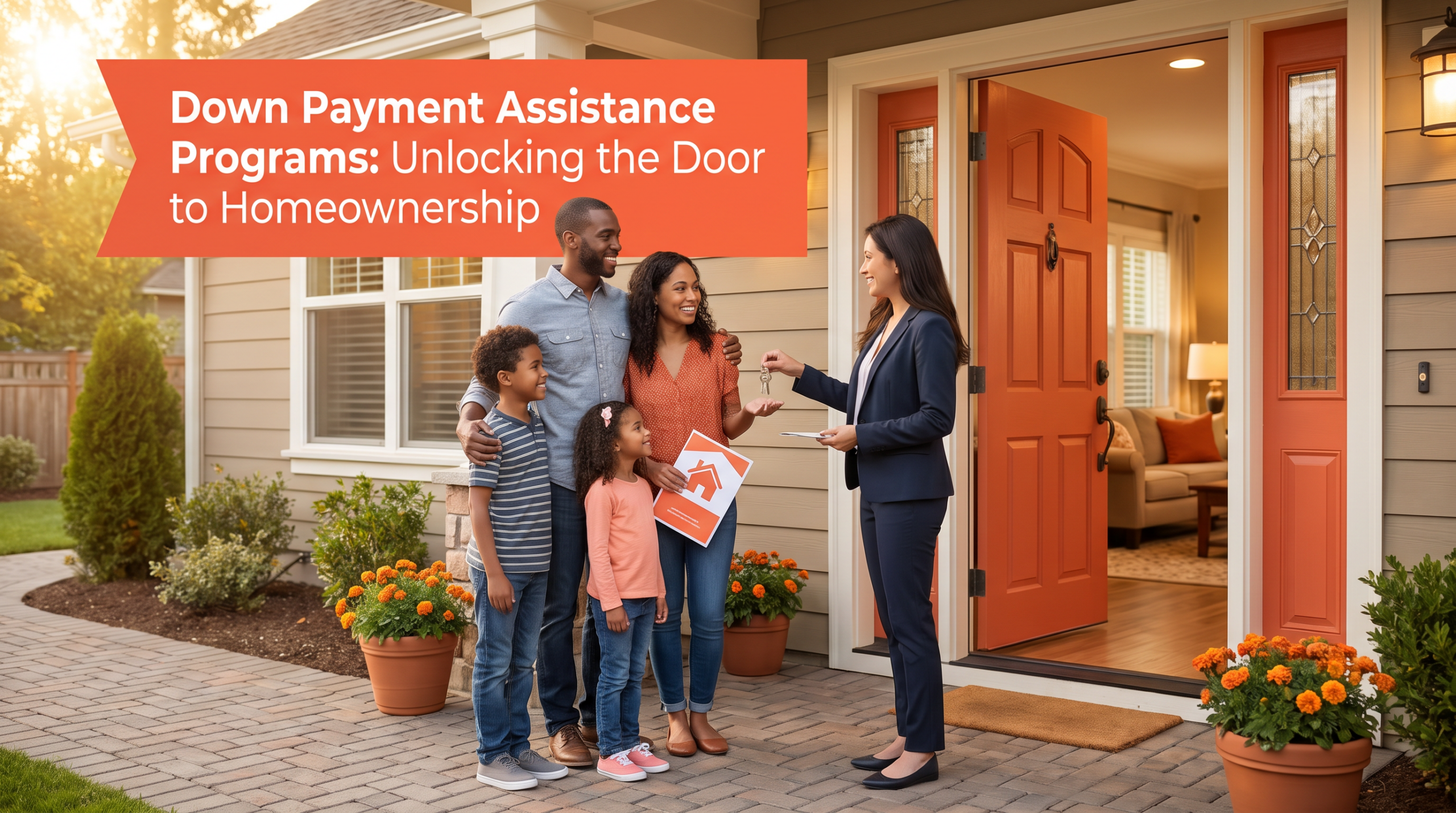
Buying a home is a significant milestone, but for many first-time homebuyers, saving enough for a down payment can feel like an insurmountable challenge. Thankfully, there are several Down Payment Assistance Programs available in Ontario, Canada that can help ease this burden, especially for those who qualify based on specific financial or personal circumstances. Understanding these programs can bring homeownership within reach, making your dream of owning a home more attainable.
Down Payment Assistance Programs are designed to help potential homebuyers secure the funds needed to cover the initial payment on a home. Typically, a down payment is a percentage of the home’s purchase price, with most mortgage lenders requiring at least 5% in Canada. For example, on a $500,000 home, the minimum down payment would be $25,000.
While saving up this amount can be daunting, especially with rising home prices in Ontario, various government and non-government programs exist to help ease the financial burden. These programs offer financial support either as grants, loans, or incentives that reduce the immediate cash requirement for homebuyers.
Qualifying for down payment assistance programs depends on a variety of factors, including income, location, and the type of property you’re purchasing. Some programs are aimed specifically at first-time homebuyers, which typically means someone who hasn’t owned a home in the last three years. Others are designed to support low- and moderate-income families or buyers looking to purchase homes in certain regions or neighborhoods.
Most down payment assistance programs have specific eligibility criteria, including but not limited to:
Residency Requirements: You typically need to be a resident of the municipality or province where the program is offered.
Below are some of the most widely recognized Down Payment Assistance Programs available to eligible homebuyers in Ontario.
Ontario Home Ownership Savings Plan (OHOSP)
Although no longer open to new applicants, the Ontario Home Ownership Savings Plan (OHOSP) previously helped first-time buyers save for down payments. Today, the First Home Savings Account (FHSA) serves a similar purpose by helping buyers accumulate savings.
First-Time Home Buyer Incentive (FTHBI)
The First-Time Home Buyer Incentive (FTHBI) is a Government of Canada program that reduces mortgage payments by providing a shared-equity loan of 5-10% of the home’s value. Repayment occurs when the home is sold or within 25 years.
RRSP Home Buyers’ Plan (HBP)
The RRSP Home Buyers’ Plan allows first-time buyers to withdraw up to $35,000 from their RRSPs, tax-free, to use as a down payment. Couples can withdraw a total of $70,000. The amount is repayable over 15 years.
First Home Savings Account (FHSA)
The FHSA allows Canadians to save up to $40,000 for their first home. Contributions are tax-deductible, and withdrawals are tax-free when used for purchasing a home, combining the benefits of both a TFSA and an RRSP.
CMHC Affordable Housing Initiatives
The Canada Mortgage and Housing Corporation (CMHC) offers initiatives to make homeownership more accessible, including grants and financing programs for low- and moderate-income families, easing the down payment burden for first-time buyers.
The main benefit of down payment assistance is that it makes homeownership more accessible, especially for first-time buyers or individuals who may struggle to save a large sum of money. Other benefits include:
Better loan terms: With a larger down payment, buyers may qualify for better mortgage terms, including lower interest rates and more favorable repayment terms.
To apply for a down payment assistance program in Ontario, the first step is to check your eligibility and the specific requirements of the program you’re interested in. You will usually need to provide proof of income, information about your financial situation, and details about the property you intend to purchase.
It’s also recommended to work with a mortgage professional who is familiar with these programs and can help guide you through the application process.
These frequently asked questions provide general educational information about down payment assistance programs and planning for a home purchase. Program availability, eligibility, contribution limits, lender requirements, acceptable down-payment sources, mortgage insurance, costs, and approval outcomes depend on the buyer’s circumstances, the property, the mortgage application, and current program rules. This information is not individualized mortgage, legal, tax, accounting, investment, or credit advice.
Down payment assistance programs are arrangements that may help eligible homebuyers assemble funds for the upfront portion of a home purchase. Depending on the program, assistance may take the form of a grant, forgivable loan, repayable loan, shared-equity arrangement, matched savings contribution, or other support. The terms, availability, and repayment requirements can differ significantly.
Assistance is not the same as mortgage approval. A buyer may still need to meet lender qualification requirements, provide documentation, pay closing costs, and satisfy the conditions of a mortgage commitment. Before relying on any program, confirm its current rules directly with the organization administering it and review how it affects the overall purchase plan.
Eligibility for down payment assistance programs depends on the individual program. Some are designed for first-time buyers, while others may focus on income, household size, disability status, location, property type, purchase price, or a buyer’s intention to occupy the home. A program may also require the property to be within a specific municipality or region.
Meeting one stated criterion does not confirm eligibility. Programs can have application windows, funding limits, document requirements, and conditions that must be met before closing. Buyers should avoid making an offer or removing a financing condition based only on an expectation that assistance will be available.
Not necessarily. Some down payment assistance programs may contribute toward part of a required down payment, while others may have a fixed maximum amount or require the buyer to contribute funds personally. A program might also assist with a specific portion of the purchase, such as the minimum required contribution, rather than every expense connected with buying a home.
A complete budget should distinguish the down payment from deposit obligations, legal costs, moving expenses, insurance, property-tax adjustments, inspection costs, and other closing expenses. A buyer should confirm whether an assistance amount is paid before closing, on closing, or after other requirements have been met.
The minimum down payment in Canada generally depends on the property’s purchase price and the mortgage structure. Federal consumer guidance explains that homes priced at $500,000 or less generally require at least 5 percent; for a purchase price above $500,000 and below $1.5 million, the minimum is generally 5 percent of the first $500,000 and 10 percent of the remaining portion; homes priced at $1.5 million or more generally require at least 20 percent.
A minimum does not mean that every buyer will qualify with that amount. The lender may assess income, debt obligations, credit history, property details, and the source of funds. Use XLG Mortgage Group’s home-buying budget calculator for a preliminary educational estimate, then verify the details of your situation before making a commitment.
Many down payment assistance programs are intended for first-time homebuyers, but not every program uses the same definition or eligibility standard. Some programs may define a first-time buyer by whether the applicant has owned or occupied a principal residence within a stated period. Others may be available to particular groups regardless of previous ownership.
Do not assume that prior ownership automatically prevents participation, or that a first purchase automatically qualifies. Review each program’s current terms and ask how the program defines eligibility. XLG Mortgage Group’s guidance for a first home purchase can help buyers identify broader planning questions before they begin their property search.
In some circumstances, a buyer may use personal savings alongside assistance, but the permitted combination depends on the assistance provider and lender. Both may need to understand where every portion of the down payment comes from, whether funds are repayable, and whether any conditions attach to the assistance.
Keep account statements and program documents organized. Moving money between accounts shortly before closing without a clear record can create questions about source of funds. A buyer should not assume that funds are acceptable merely because they are available in an account; the lender and assistance provider may each have separate documentation requirements.
A gifted down payment may be acceptable in some mortgage applications, subject to lender requirements and proper documentation. Lenders commonly need to confirm the donor, the relationship to the buyer, the amount, and whether the funds are a true gift rather than a loan that creates another repayment obligation.
Whether a gift can be combined with down payment assistance programs depends on the program’s rules. The assistance provider may require a minimum buyer contribution, limit other sources, or ask for specific evidence before approving funds. Discuss the intended structure early so that the gift, assistance, mortgage application, and closing plan are consistent.
Borrowed funds may affect mortgage qualification because they can create an additional debt payment or change the borrower’s financial position. Whether borrowed funds can form part of a down payment depends on the mortgage product, lender requirements, the source of the funds, and the borrower’s overall application. It should never be assumed to be acceptable without disclosure.
Buyers should disclose loans, lines of credit, credit-card balances, and other financial obligations accurately. If debt management is a concern, information about a mortgage-based debt consolidation review explains a separate service; it does not mean that borrowing more for a purchase is appropriate or available.
They can. A lender may need to review the form of assistance, whether it must be repaid, whether it is secured against the property, and how it affects the buyer’s debt obligations and available equity. Repayable or shared-equity assistance may have different implications than a non-repayable contribution.
Mortgage qualification remains a separate process. Income, employment information, credit history, debts, the property, appraisal considerations, mortgage terms, and the complete source of down payment can all matter. Assistance may support a purchase plan, but it does not replace a lender’s underwriting review or guarantee mortgage approval.
If the down payment is less than 20 percent of the purchase price, mortgage loan insurance is typically required for an eligible insured mortgage. The need for insurance is connected to the size and structure of the mortgage, not simply to whether the buyer used assistance. Insurance eligibility and premiums are determined under applicable insurer and lender requirements.
A larger down payment can change the loan-to-value ratio, but it does not remove the need to qualify. Buyers can use XLG Mortgage Group’s mortgage-insurance estimate tool to explore general scenarios. The result is educational only and is not an insurer decision, commitment, or premium quote.
Documentation varies, but down payment assistance programs may request identification, proof of income, tax information, banking records, a purchase agreement, proof of deposit, confirmation of household members, property details, and documents explaining other down-payment sources. A lender may also need its own documents for the mortgage application.
Keep the names, dates, amounts, and property information consistent across all records. If the down payment includes savings, a gift, assistance, or a withdrawal from a registered plan, retain the documents that explain each source. Supplying documents helps a file be reviewed, but it does not guarantee program approval, a mortgage approval, or a closing outcome.
Some programs may address a limited range of purchase costs, while others are restricted to the down payment. A buyer should read the program terms carefully rather than assuming that closing expenses are included. Legal fees, land-transfer taxes where applicable, title insurance, inspection costs, moving expenses, adjustments, and insurance can be separate from the down payment.
Planning for these costs is important because funds needed at closing may not all come from the mortgage. XLG Mortgage Group’s Ontario land-transfer-tax planning tool can support a general estimate, but actual taxes and closing amounts should be confirmed with the appropriate professionals.
No. Down payment assistance programs can be federal, provincial, municipal, employer-based, non-profit, or private-sector initiatives, and their geographic reach differs. Some are limited to a particular city, county, service area, housing development, or group of applicants. Funding can also be limited or unavailable when an application is made.
Confirm the program administrator, service area, application deadline, property requirements, and funding status before treating an opportunity as part of your purchase plan. XLG Mortgage Group does not represent that any specific program is available, appropriate, or approved for a particular buyer or property.
It depends on the program. Some forms of assistance may be non-repayable if all conditions are met, while others may be repayable over time, due when the property is sold, triggered by refinancing, or connected to future changes in the property’s value. Shared-equity arrangements can also involve a future payment calculated under program-specific rules.
Review repayment triggers before accepting assistance. Ask what happens if you sell, refinance, rent out the property, move, add another owner, or repay the mortgage early. The written agreement, not a general summary, controls the obligations. Consider independent legal or financial advice when the terms are complex or the commitment is substantial.
Eligible buyers may be able to use funds from registered savings arrangements alongside down payment assistance programs, subject to the rules of the account, tax rules, program conditions, and lender requirements. For example, a buyer may need to meet a particular definition of first-time homebuyer or follow withdrawal and repayment rules.
Because registered-plan rules can change and the tax consequences depend on individual circumstances, verify the requirements with the plan provider and a qualified tax professional where appropriate. Do not withdraw funds until you understand whether the timing, documentation, and purchase requirements align with the planned transaction.
Starting early is generally sensible because some programs require registration, pre-approval, a completed application, or confirmation of funds before an offer is accepted or before a closing date. Waiting until late in the transaction may leave insufficient time to gather documents or respond to questions from the program administrator or lender.
Timing rules differ, so confirm them directly. A mortgage pre-approval discussion may help you understand the financial information commonly considered before shopping, but it is not final mortgage approval and does not confirm assistance-program eligibility or funding.
A deposit is commonly paid after an offer is accepted and forms part of the buyer’s contribution toward the purchase, subject to the terms of the agreement. A down payment is the overall amount the buyer contributes toward the home’s purchase price rather than borrowing through the mortgage. The deposit may be included within the down payment, but it is not necessarily the entire amount.
The timing and handling of deposits are important contractual matters. Buyers should understand the amount due, deadline, payee, and consequences of missing the deadline before signing an agreement. For a general explanation of the initial contribution in a financed purchase, see this overview of a home-purchase down payment.
Many down payment assistance programs are designed for an owner-occupied principal residence rather than an investment property, but requirements vary. A program may specify occupancy rules, prohibit rental use, require the buyer to move into the home within a defined period, or impose restrictions if the property is later rented or sold.
Mortgage rules for investment properties can also differ from owner-occupied purchases. Do not assume that assistance intended for a personal residence can be used for a rental or investment transaction. Review the written program terms and mortgage requirements before making investment-related plans.
Self-employed buyers may still explore assistance options, but they should expect careful documentation of income, business activity, taxes, debts, down-payment sources, and the intended property. Program requirements and mortgage underwriting may each require evidence that differs from a salaried applicant’s documentation.
Organizing financial records early can help identify questions before a purchase offer is made. XLG Mortgage Group’s self-employed mortgage information discusses this separate mortgage service. It does not confirm qualification, acceptance of a specific assistance source, or approval for a mortgage.
XLG Mortgage Group can help begin a general discussion about mortgage planning, the questions to ask about down-payment sources, and documents that may be relevant to a mortgage application. That discussion can include the relationship between a proposed purchase price, savings, assistance, deposit requirements, closing costs, existing debts, and mortgage qualification.
A conversation does not guarantee a program is available, that an application will be accepted, or that a mortgage will be approved. To understand the business, visit the XLG Mortgage Group background or return to XLG Mortgage Group’s home page. Buyers should obtain independent legal, tax, and financial advice where their circumstances require it.
Ready to take the next step toward securing your mortgage? Reach out to XLG Mortgage Group today for a consultation. Our experts are available to answer your questions, discuss your financial goals, and help you find the mortgage product that best suits your needs.
+1 905-206-0090
+ 1 833-932-0012
info@xlgmortgagegroup.com
5250 Solar Drive, Unit # 208,
Mississauga, Ontario, L4W 5M8
207-460 Hespeler Road,
Cambridge, ON, N1R 0E3
© 2026 Created with CDT